Summarize this blog post with: ChatGPT | Perplexity | Claude | Grok
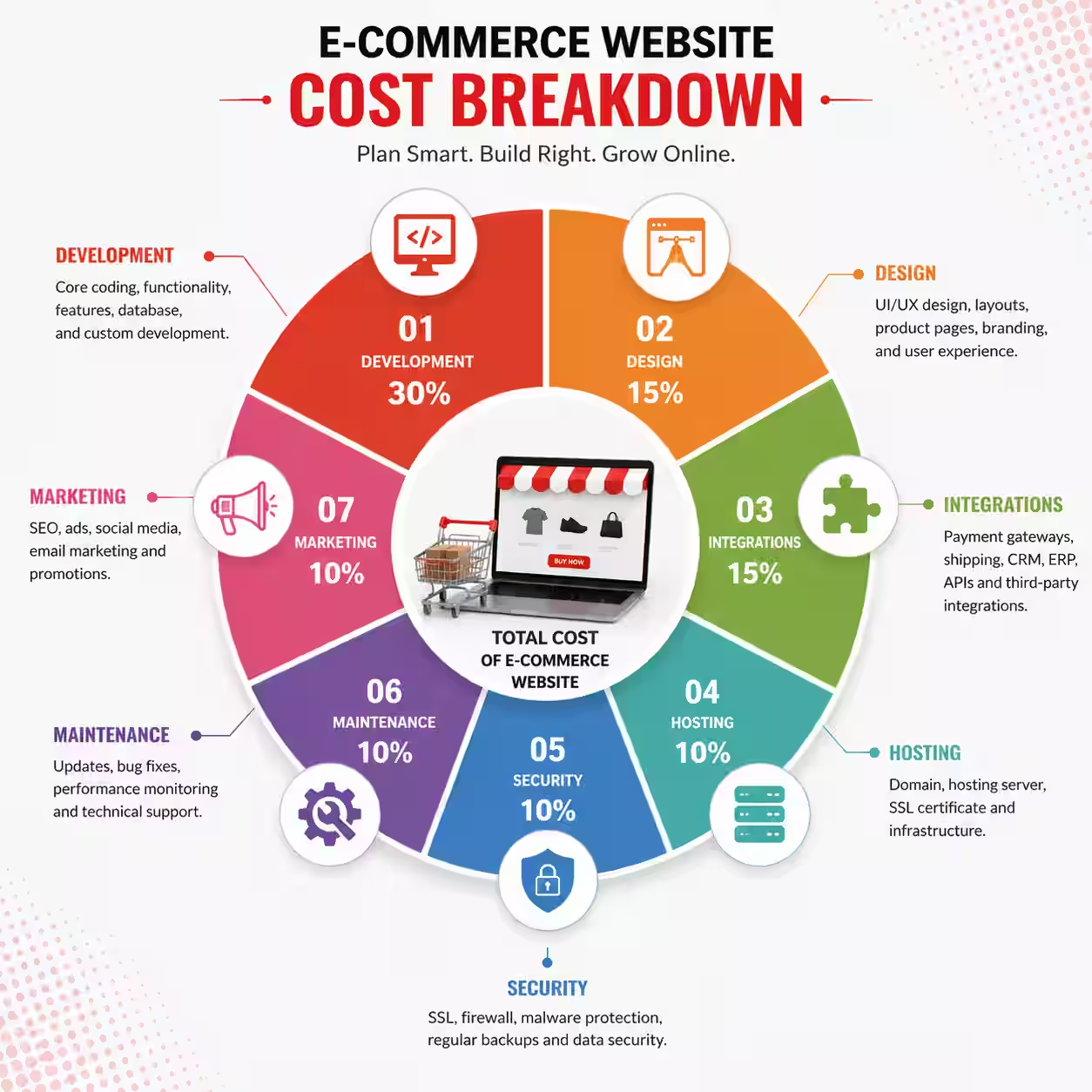
You've probably already decided that an online store can help your business reach more customers and generate sales beyond a physical location. However, the e-commerce website development cost can vary significantly depending on your platform, design, features, integrations and business requirements. In this guide, you'll learn the major cost factors, realistic 2026 pricing ranges in India, platform differences, ongoing expenses and how to plan an e-commerce website budget.
Key Takeaways
- E-commerce website development cost depends on the platform, design complexity, functionality, integrations, product catalog size and level of customization required.
- E-commerce website budgets include more than development, with domain, hosting, security, payment processing, maintenance and marketing potentially adding recurring costs.
- WooCommerce, Shopify and custom development differ in their pricing, flexibility, maintenance requirements and scalability.
- Basic e-commerce websites generally cost less than custom stores requiring advanced integrations, personalized features and complex business workflows.
- Ongoing website costs should be included in the initial budget to avoid unexpected expenses after the store goes live.
- Businesses should compare development companies based on value and capability, not just the lowest quoted price.
- A requirement-based quotation provides a more accurate estimate than relying on a generic e-commerce website development price.
What Is E-Commerce Website Development Cost?
E-commerce website development cost is the total investment required to design, develop, launch, and maintain an online store, including development, hosting, security, integrations, and other required services.
First, an e-commerce website is more than a collection of product pages. It normally includes product management, shopping cart functionality, checkout, payment processing, order management, customer accounts, shipping, security, and administrative features.
For example, a small clothing business with 50 products and standard payment and shipping requirements may need a much simpler website than a large retailer with thousands of products, multiple warehouses, ERP integration, and advanced customer accounts.
Current 2026 industry pricing guides show a wide range for e-commerce development in India, with estimates varying from tens of thousands of rupees for basic stores to several lakh rupees for highly customized platforms. The difference reflects genuine differences in scope rather than one universal market price.
E-commerce website development cost is therefore best calculated from business requirements rather than from a fixed package price.
Why Is E-Commerce Website Development Cost Important?
Understanding e-commerce website development cost helps businesses create a realistic budget before investing in an online store.
First, a clear budget helps you separate essential features from optional features. For example, payment gateway integration may be essential for an online retailer, while an advanced loyalty program may be added after the store begins generating sales.
Moreover, understanding the complete cost prevents businesses from focusing only on the initial development quotation. Hosting, maintenance, security, platform subscriptions, plugins, payment processing, and marketing can continue after launch.
For example, a business may receive a low development quote but later discover additional charges for premium plugins, integrations, product uploads, maintenance, or custom functionality.
The cheapest e-commerce website quote is not always the lowest-cost solution over the long term.
How Much Does an E-Commerce Website Cost in India in 2026?
E-commerce website development in India can range from approximately ₹40,000 for a basic store to ₹25,00,000 or more for advanced enterprise-level solutions, depending on the scope and customization required.
The following ranges are useful for initial planning rather than fixed quotations:
| E-commerce Website | Indicative Development Cost |
|
|
|---|---|---|---|
| Basic/Starter Store | ₹40,000 – ₹90,000 | Small businesses and first-time sellers | |
| Standard Business Store | ₹90,000 – ₹2,50,000 | Growing retailers and D2C brands | |
| Advanced E-commerce Store | ₹2,50,000 – ₹6,00,000+ | Growing brands with custom requirements | |
| Custom/Enterprise Store | ₹6,00,000 – ₹15,00,000+ | Large businesses and complex operations | |
| Multi-Vendor Marketplace |
|
Businesses managing multiple sellers |
Several 2026 Indian pricing guides place standard Shopify or WooCommerce implementations broadly in the lower-to-mid lakh range, while custom and headless solutions can move substantially higher.
The final quotation should be based on your required features, integrations, product volume, design requirements, and technology stack.
What Factors Affect E-Commerce Website Development Cost?
E-commerce website development cost increases when a project requires more customization, integrations, products, workflows, or technical complexity.
1. Website Design and UI/UX
Custom UI/UX design usually requires more planning and design work than using a pre-built theme.
For example, a fashion brand may require custom product filters, visual product galleries, size guides, wishlist functionality, and a branded checkout experience.
A template-based website can reduce initial design costs, while a custom interface provides greater control over branding and customer experience.
2. Number of Products
The size and complexity of your product catalog can affect development and content-entry requirements.
For example, a store selling 30 products may require simple categories and filters, while a store with 5,000 products may need advanced search, filtering, bulk imports, inventory synchronization, and optimized database management.
3. Payment Gateway Integration
Payment gateway integration allows customers to complete transactions through supported payment methods.
Depending on the business, developers may integrate services such as Razorpay, PayU, Cashfree, Stripe, or other payment providers.
Development costs can increase when the website needs multiple payment methods, refunds, transaction tracking, automated payment status updates, or specialized payment workflows.
4. Shipping and Logistics Integration
Shipping integration connects the store with delivery providers and helps automate shipping-related operations.
For example, an online retailer may require automated shipping calculations, order tracking, delivery status updates, and integration with logistics platforms.
Advanced shipping rules based on location, weight, product category, or order value can increase development complexity.
5. Third-Party Integrations
Third-party integrations connect the e-commerce website with external systems.
Common examples include:
- CRM software
- ERP systems
- Accounting software
- Inventory management
- Email marketing platforms
- Shipping platforms
- Analytics tools
- Customer support systems
Every additional integration can increase development time because developers must connect, test, secure, and maintain the data flow between systems.
6. Custom Features
Custom functionality is one of the biggest factors affecting e-commerce development cost.
For example, B2B businesses may require bulk ordering, customer-specific pricing, quotation requests, approval workflows, purchase orders, or credit limits.
Similarly, a marketplace may require vendor registration, seller dashboards, commissions, vendor payouts, and multi-store management.
How Much Does Shopify E-Commerce Website Development Cost?
Shopify e-commerce website development cost depends on the level of customization, theme work, apps, integrations, and ongoing platform expenses.
Shopify can be suitable for businesses that want to launch quickly without managing the entire underlying infrastructure themselves.
For example, a startup selling a limited product range may use a customized Shopify theme with standard payment, shipping, analytics, and product-management functionality.
Industry estimates for 2026 commonly place Shopify development in the approximate ₹40,000–₹1,50,000 range for simpler implementations, while more customized builds can cost substantially more.
However, businesses should also consider recurring platform, app, payment, and maintenance costs when calculating the total cost of ownership.
How Much Does WooCommerce Website Development Cost?
WooCommerce website development cost depends on hosting, design, plugins, custom development, integrations, security, and maintenance requirements.
WooCommerce is an e-commerce platform built for WordPress and can provide significant control over website functionality and content.
For example, a business that already uses WordPress and wants to add an online store may choose WooCommerce to keep its website and store within the same ecosystem.
Current 2026 pricing references commonly place WooCommerce development from roughly ₹50,000 to ₹2,00,000 for many standard projects, with more complex implementations costing significantly more.
WooCommerce can be attractive for businesses that prioritize flexibility and control, but the total budget should include hosting, premium extensions, security, and ongoing maintenance.
How Much Does Custom E-Commerce Website Development Cost?
Custom e-commerce website development costs more because developers build functionality specifically around the business's workflows and requirements.
A custom store may require a unique frontend, custom backend, advanced APIs, ERP integration, inventory synchronization, personalized pricing, or specialized checkout processes.
For example, a manufacturer selling directly to distributors may need different pricing for different customer accounts, bulk ordering, quotation workflows, inventory synchronization, and payment terms.
2026 pricing references commonly place advanced custom or enterprise e-commerce projects from several lakh rupees upward, with complex platforms potentially exceeding ₹10 lakh or ₹15 lakh.
Custom development is most valuable when standard platforms cannot efficiently support the business model or required workflows.
What Are the Ongoing Costs of Running an E-Commerce Website?
Ongoing e-commerce website costs are recurring expenses required to keep the online store secure, functional, updated, and capable of generating sales.
These expenses can include:
| Ongoing Expense |
|
|---|---|
| Hosting | Keeps the website accessible |
| Domain renewal |
|
| SSL/Security |
|
| Maintenance | Fixes technical issues and updates systems |
| Plugins/Apps | Adds specialized functionality |
| Payment processing | Processes customer transactions |
| SEO | Helps attract organic search traffic |
| Marketing | Generates traffic and sales |
| Backup | Helps recover website data |
For example, a growing online store may need better hosting and additional maintenance as traffic and transactions increase.
The total cost of owning an e-commerce website includes both the initial build and recurring operational expenses.
Which E-Commerce Website Platform Should You Choose?
The right e-commerce platform depends on your business size, budget, technical requirements, customization needs, and long-term growth plans.
|
Requirement |
|
WooCommerce |
|
|---|---|---|---|
| Fast launch | Excellent | Good | Moderate |
| Customization |
|
Excellent | Very high |
| Technical control | Moderate | High | Very high |
| Initial complexity | Low | Moderate | High |
| Scalability | High |
|
Very high |
| Maintenance responsibility | Lower | Higher | Highest |
| Best suited for | Fast-growing stores | Flexible content-led stores | Complex business models |
Shopify, WooCommerce, and custom development are not simply competing choices; they solve different business requirements.
For example, a small retailer may benefit from a ready-made platform, while a large B2B company may require custom workflows that justify a higher development investment.
What Tools and Features Should an E-Commerce Website Include?
An effective e-commerce website should include tools that make buying, selling, managing products, and analyzing performance easier.
Important features can include:
- Mobile-responsive design
- Product catalog management
- Product search and filters
- Shopping cart
- Secure checkout
- Secure checkout
- Payment gateway
- Order management
- Inventory management
- Shipping integration
- Customer accounts
- Coupons and discounts
- Reviews and ratings
- Analytics
- SEO-friendly architecture
- Security and backups
For example, Google Analytics and Google Search Console can help businesses understand traffic and organic search performance, while payment and shipping integrations streamline transactions and fulfillment.
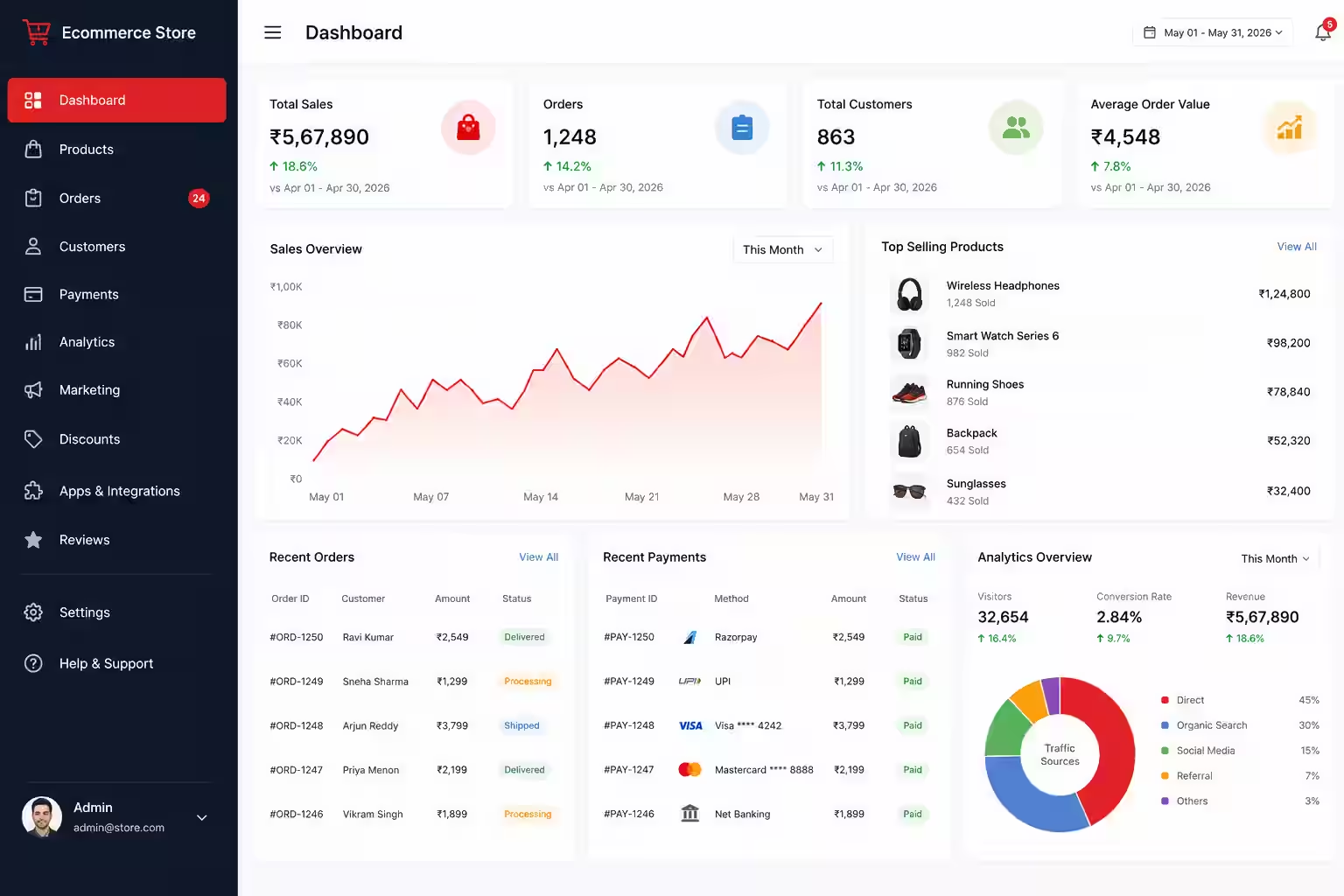
The right feature set should be determined by customer needs and business processes rather than by adding every available feature.
How Can You Choose an E-Commerce Website Development Company in Coimbatore?
Choosing an e-commerce website development company in Coimbatore should involve evaluating technical expertise, portfolio quality, communication, support, scalability, and pricing transparency.
First, review previous e-commerce projects and check whether the developer has experience with your type of business.
Second, ask exactly what the quotation includes. A professional quotation should clarify:
- Design and development
- Number of pages/templates
- Product upload responsibility
- Payment gateway integration
- Shipping integration
- Hosting
- Security
- SEO setup
- Testing
- Training
- Maintenance
- Post-launch support
For example, two agencies may quote ₹1,50,000 and ₹2,00,000, but the second quotation may include custom design, SEO setup, integrations, training, and six months of support.
A transparent quotation makes e-commerce development costs easier to compare because businesses can evaluate scope rather than price alone.
What's Next? How Should You Plan Your E-Commerce Website Budget?
Planning your e-commerce website budget starts with defining your business requirements before requesting quotations.
Use this checklist before speaking with a development company:
- Define your products — Estimate product count, categories, variants, and product attributes.
- Choose your business model — Decide whether you need B2C, B2B, D2C, subscription, or marketplace functionality.
- List essential features — Identify payment, shipping, inventory, customer accounts, discounts, and other requirements.
- Identify integrations — List CRM, ERP, accounting, logistics, marketing, and other systems.
- Choose a platform — Compare Shopify, WooCommerce, or custom development based on business requirements.
- Plan recurring expenses — Include hosting, maintenance, security, plugins, platform fees, and marketing.
- Request detailed quotations — Ask developers to separate one-time and recurring costs
By completing this process, you can avoid paying for unnecessary functionality while ensuring that essential business requirements are covered.
Conclusion
E-commerce website development cost depends on the platform, design, features, integrations, product catalog, customization and ongoing maintenance requirements.
A basic online store may require a relatively modest investment, while a custom or enterprise e-commerce platform can require several lakh rupees. Current 2026 Indian pricing references show substantial variation because businesses have very different technical and operational requirements.
The best approach is to choose a website based on business requirements rather than simply selecting the lowest quotation. A well-planned e-commerce website can provide a scalable foundation for online sales, customer management and future growth.
If you're planning an e-commerce website in Coimbatore, start by documenting your requirements and request a detailed quotation based on your actual business needs.