Most businesses already understand the importance of managing customer relationships, but many struggle because generic CRM software doesn't match their unique workflows. The real challenge isn't choosing a CRM—it's finding a solution built around your business processes. In this guide, you'll learn what a custom CRM development company does, how custom CRM development works, what it costs, and how to choose the right development partner.
Key Takeaways
- Custom CRM development companies build customer relationship management systems tailored to specific business workflows, goals, and operational requirements.
- Custom CRM solutions provide greater flexibility, scalability, and integration capabilities than standard CRM platforms.
- CRM development projects typically include discovery, architecture planning, design, development, testing, deployment, and ongoing support.
- CRM automation features improve customer management, sales productivity, reporting accuracy, and operational efficiency.
- Development costs depend on features, integrations, security requirements, user roles, and deployment complexity.
- Vendor selection should focus on technical expertise, industry experience, portfolio quality, communication, and post-launch support.
- Long-term CRM success depends on user adoption, staff training, process optimization, and continuous improvement.
What Is a Custom CRM Development Company and What Services Does It Offer?
A custom CRM development company designs, develops, and maintains customer relationship management systems tailored to a business's unique processes and goals.
First, it is important to understand that a CRM software provider and a CRM development company are not the same. CRM providers sell ready-made platforms, while development companies create customized systems designed around your exact business workflows.
For example, a manufacturing company may require supplier management, production tracking and ERP synchronization inside its CRM. Most off-the-shelf solutions cannot deliver this level of customization without extensive workarounds.
According to Metrigy, CRM remains one of the largest enterprise software categories globally, reaching approximately $83 billion in 2025.
CRM Software Providers vs CRM Development Companies
|
|
|
|
|
|
|
|
|
|
|
|
|
|
|
|
|
|
|
|
|
|
|
|
Moreover, businesses often hire a CRM development company when existing platforms cannot support their workflows, reporting requirements, or integration needs.
Custom CRM solutions offer greater flexibility and customization than off-the-shelf CRM software because every feature is built around specific operational needs.
Types of CRM Solutions Offered
A professional CRM software development company typically delivers:
- Sales CRM software development
- Customer support CRM platforms
- Enterprise CRM development
- Cloud CRM development
- Mobile CRM applications
- Industry-specific CRM solutions
- CRM integration services
Why Should Businesses Invest in Custom CRM Development?
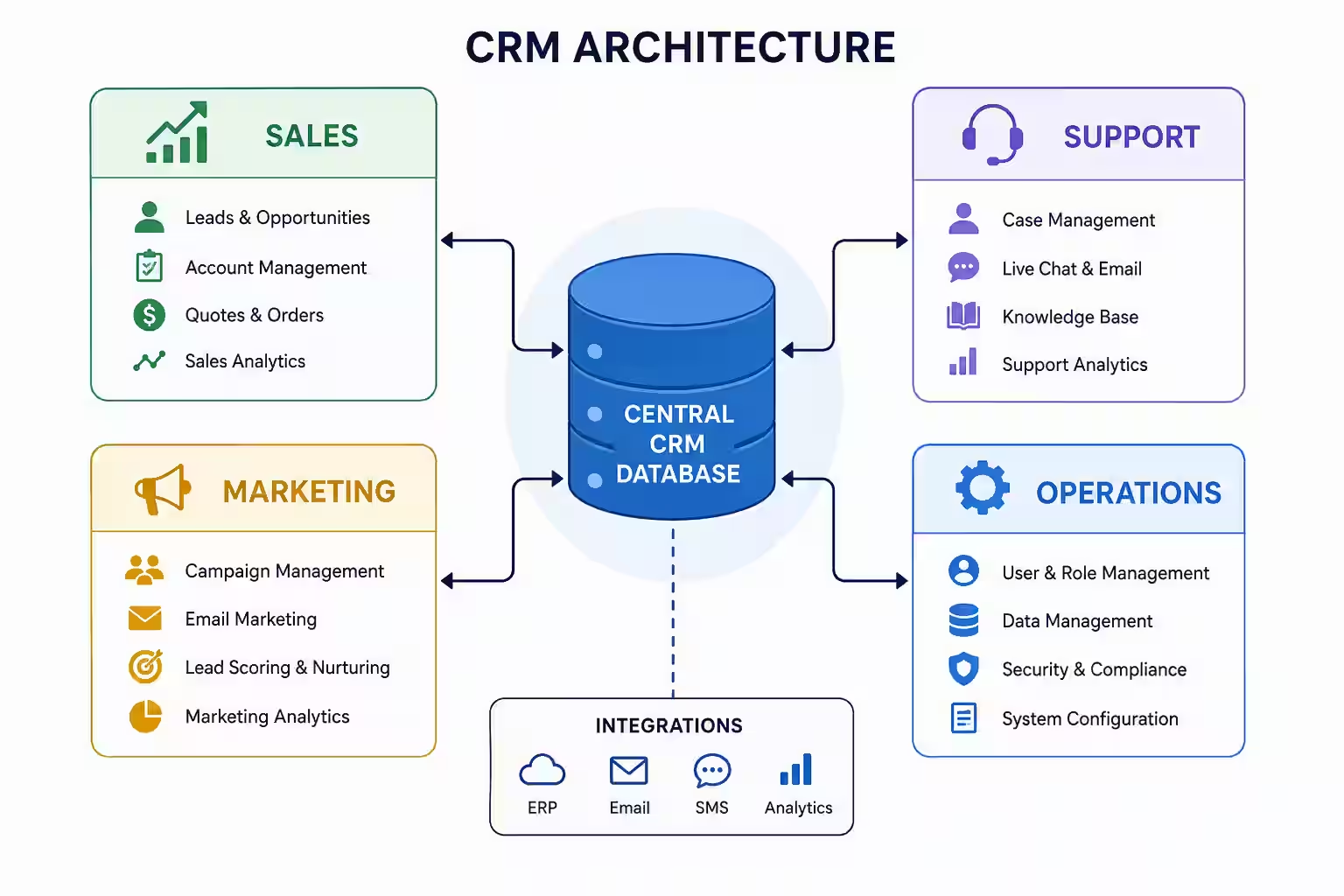
Custom CRM development helps businesses automate workflows, centralize customer data and improve operational efficiency.
First, companies today operate across multiple tools, communication channels and customer touchpoints. Managing this information manually creates inefficiencies and lost opportunities.
According to Metrigy research, 67.9% of organizations actively use CRM platforms, while another 12% plan to adopt CRM.
Business Process Automation
Business process automation reduces repetitive tasks and improves productivity
For example, a sales team can automatically assign leads, schedule follow-ups, send proposals, and update pipeline stages without manual intervention.
By implementing custom workflow automation, businesses reduce administrative overhead and increase team focus on revenue-generating activities.
Centralized Customer Management
Customer data centralization improves visibility across departments.
For example, marketing teams can view campaign engagement, sales teams can track opportunities, and support agents can access customer history from one dashboard.
This approach creates consistent customer experiences and faster response times.
Scalability and Competitive Advantage
According to Grand View Research, the global CRM market is projected to reach $163.16 billion by 2030, growing at a CAGR of 14.6%
As businesses grow, custom CRM platforms scale alongside operations. Unlike generic solutions, they can accommodate new departments, markets, products, and integrations without major disruptions.
Additionally, businesses using CRM-driven retention strategies often experience significantly lower churn rates and higher customer lifetime value.
How Does the Custom CRM Development Process Work?
Custom CRM development involves analyzing business requirements, designing workflows, building features, integrating third-party systems, and deploying a scalable CRM platform.
Discovery and Requirement Gathering
First, CRM consultants analyze existing processes, pain points, and operational goals
For example, they may interview sales managers, customer support teams, and executives to understand workflow bottlenecks.
Deliverables usually include:
- Business requirement documents
- User journey maps
- Workflow diagrams
- Integration requirements
- Security specifications
CRM Architecture and Planning
CRM architecture planning defines how data, modules, users, and integrations interact within the system.
At this stage, developers select infrastructure, database structures, security models, and API frameworks.
For example, an enterprise CRM may require role-based permissions, audit logs, and multi-location access.
UI/UX Design
Next, designers create interfaces that match user behavior.
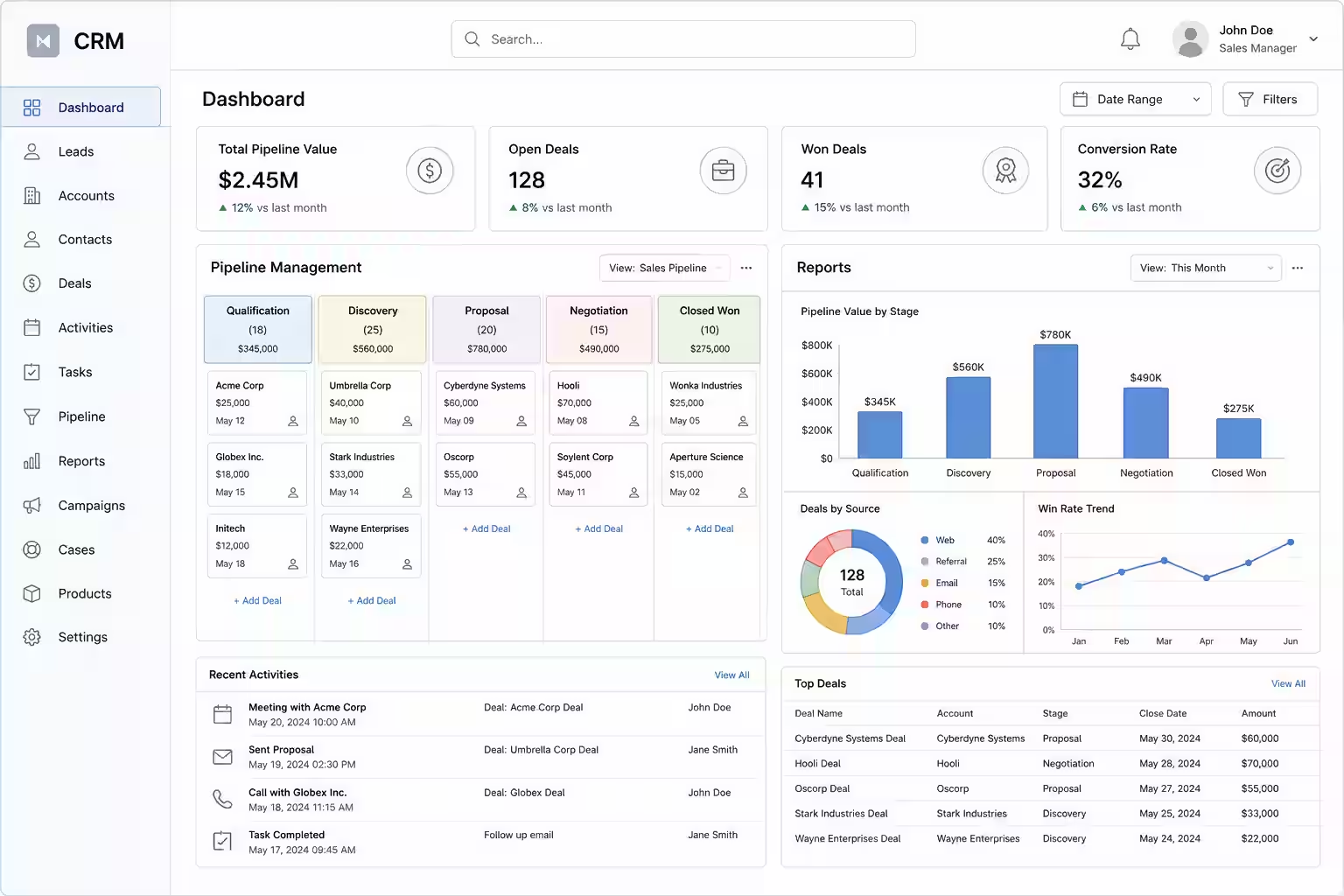
For example, sales representatives need quick access to leads and opportunities, while managers prioritize dashboards and reporting.
Development, Testing, and Deployment
After approval, developers build the CRM system in stages.
Typical phases include:
- Backend development
- Frontend development
- Integration development
- Quality assurance testing
- User acceptance testing
- Production deployment
Training and Maintenance
A successful CRM implementation depends on user adoption, process alignment, staff training, and continuous optimization after launch.
For example, even a technically perfect CRM can fail if employees do not understand how to use it effectively.
What Features Should a Custom CRM System Include?
A custom CRM system should include contact management, lead tracking, workflow automation, reporting, and integration capabilities.
Contact and Customer Management
Contact management stores customer information in a centralized database.
Essential fields include:
- Customer profiles
- Communication history
- Purchase records
- Support tickets
- Activity timelines
Lead Tracking and Sales Pipeline Management
Sales pipeline management helps businesses track opportunities from initial contact to closed deals.
For example, sales teams can monitor conversion stages, forecast revenue, and identify stalled opportunities.
According to industry benchmarks, CRM systems can improve sales productivity by 15–20% while shortening sales cycles.
Workflow Automation
- Revenue forecasting
- Team performance tracking
- Customer behavior analysis
- Marketing attribution reporting
According to benchmark data from 939 B2B companies, AI-enhanced CRM systems increased sales productivity by 53% on average.
Reporting and Analytics
Automation features typically include:
- Lead assignment
- Email sequences
- Task reminders
- Approval workflows
- Customer onboarding processes
Mobile Accessibility
Mobile CRM access allows teams to manage customer relationships from any location.
For example, field sales representatives can update opportunities directly from client meetings.
How Is Custom CRM Different From Off-the-Shelf CRM Software?
Custom CRM software is designed around specific business requirements, while off-the-shelf CRM software is designed for broad market adoption.
Flexibility and Customization
Custom CRM platforms adapt to business processes. Off-the-shelf solutions often force businesses to adapt their processes to software limitations.
A recent industry discussion highlighted that many organizations now seek CRM systems built around actual workflows rather than generic templates.
Cost Comparison
While custom CRM development requires a higher initial investment, long-term costs may be lower when businesses avoid multiple subscriptions, plugins, and customization fees.
Integration Capabilities
Custom CRM systems integrate with:
- ERP systems
- Accounting software
- Inventory management platforms
- Marketing automation tools
- Customer support systems
Maintenance Considerations
Custom CRM platforms require ongoing maintenance, but they also provide complete control over future enhancements and security standards.
How Much Does Custom CRM Development Cost in 2026?
CRM development costs are primarily influenced by feature complexity, integration requirements, user roles, security standards, and deployment architecture.
Typical CRM Development Costs
|
|
|
|
|
|
|
|
|
|
|
|
|
|
|
|
Key Cost Factors
Several variables influence pricing:
- User roles and permissions
- API integrations
- Mobile applications
- Cloud infrastructure
- Reporting complexity
- Security requirements
- AI and automation features
ROI Considerations
Custom CRM investments generate ROI through improved efficiency, customer retention, and sales performance.
According to CRM ROI studies, 73% of companies with strong CRM adoption report higher customer retention compared to competitors.
What Industries Benefit Most From Custom CRM Development?
Custom CRM development benefits industries with complex workflows, compliance requirements, and specialized customer journeys.
Healthcare CRM
Healthcare organizations use CRM systems for:
- Patient relationship management
- Appointment scheduling
- Communication tracking
- Compliance monitoring
Real Estate CRM
Real estate firms use CRM platforms to manage:
- Property listings
- Buyer interactions
- Agent workflows
- Lead nurturing
Manufacturing CRM
Manufacturers often require:
- Supplier management
- Inventory synchronization
- Production tracking
- Dealer management
E-commerce CRM
E-commerce businesses rely on CRM systems for:
- Customer segmentation
- Purchase tracking
- Loyalty programs
- Marketing automation
Financial Services CRM
Financial organizations require advanced:
- Security controls
- Compliance reporting
- Client portfolio management
- Risk monitoring
How Do CRM Development Companies Handle Third-Party Integrations?
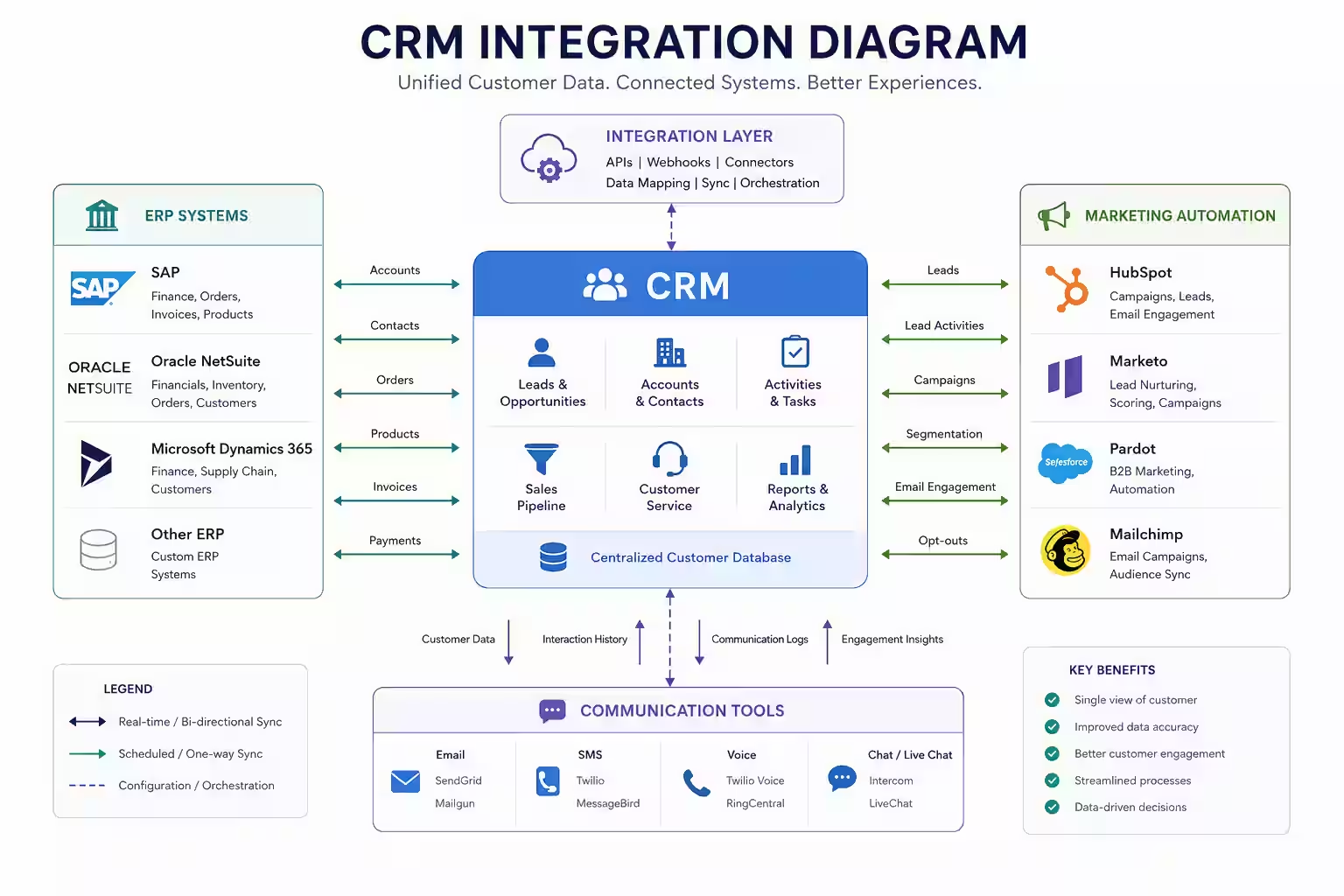
CRM development companies use APIs, middleware, and cloud services to connect CRM systems with business applications.
Common integrations include:
- ERP systems
- Payment gateways
- Marketing platforms
- Customer support tools
- Communication software
For example, a CRM may synchronize customer data with accounting software while automatically triggering marketing campaigns after purchases.
What Technologies Are Used for CRM Software Development?
CRM software development uses modern frontend frameworks, backend technologies, cloud platforms, APIs, and database systems.
Popular technologies include:
Frontend Technologies
- React
- Angular
- Vue.js
Backend Technologies
- Node.js
- .NET
- Java
- Python
Cloud Infrastructure
- AWS
- Microsoft Azure
- Google Cloud
Database Technologies
- PostgreSQL
- MySQL
- MongoDB
- SQL Server
Communication and Automation Tools
- Twilio
- SendGrid
- Slack
- HubSpot
- Mailchimp
What Should You Look for When Choosing a CRM Development Company?
The best CRM development companies combine technical expertise, industry knowledge, security practices, and long-term support capabilities.
Evaluate Industry Experience
First, review whether the company has delivered CRM solutions within your industry.
For example, healthcare CRM requirements differ significantly from e-commerce CRM requirements.
Review Technical Expertise
Assess capabilities in:
- CRM architecture
- Cloud infrastructure
- API development
- Security implementation
- Mobile development
Analyze Portfolio Quality
Portfolio reviews reveal:
- Project complexity
- Design quality
- Technical capabilities
- Industry specialization
Assess Communication and Support
Strong vendors provide:
- Incomplete requirements
- Poor stakeholder alignment
- Legacy system limitations
- User resistance
- Budget overruns
A recent CRM industry discussion emphasized that successful CRM vendors differentiate themselves through documentation, training ecosystems, quality assurance, and long-term support—not simply development speed
What Are the Common Challenges in CRM Development Projects?
CRM development projects often face challenges related to scope management, user adoption, integration complexity, and data migration.
Common obstacles include
- Incomplete requirements
- Poor stakeholder alignment
- Legacy system limitations
- User resistance
- Budget overruns
For example, migrating customer data from spreadsheets into structured CRM databases frequently requires extensive validation and cleanup.
How Do You Measure the ROI of a Custom CRM Solution?
CRM ROI is measured through revenue growth, efficiency improvements, customer retention, and operational savings.
Key performance indicators include:
- Lead conversion rates
- Customer retention rates
- Sales cycle length
- Revenue per customer
- Team productivity metrics
By tracking these metrics before and after implementation, businesses can quantify CRM impact more accurately.
What Happens After a Custom CRM System Goes Live?
Post-launch CRM success depends on adoption, optimization, monitoring, and continuous improvement.
Build a CRM Adoption Strategy
Organizations should establish:
- Training programs
- User documentation
- Internal champions
- Feedback collection processes
Optimize Business Processes
After launch, teams often discover opportunities for additional automation and workflow improvements.
Monitor Performance
- User engagement
- System usage
- Conversion rates
- Customer satisfaction
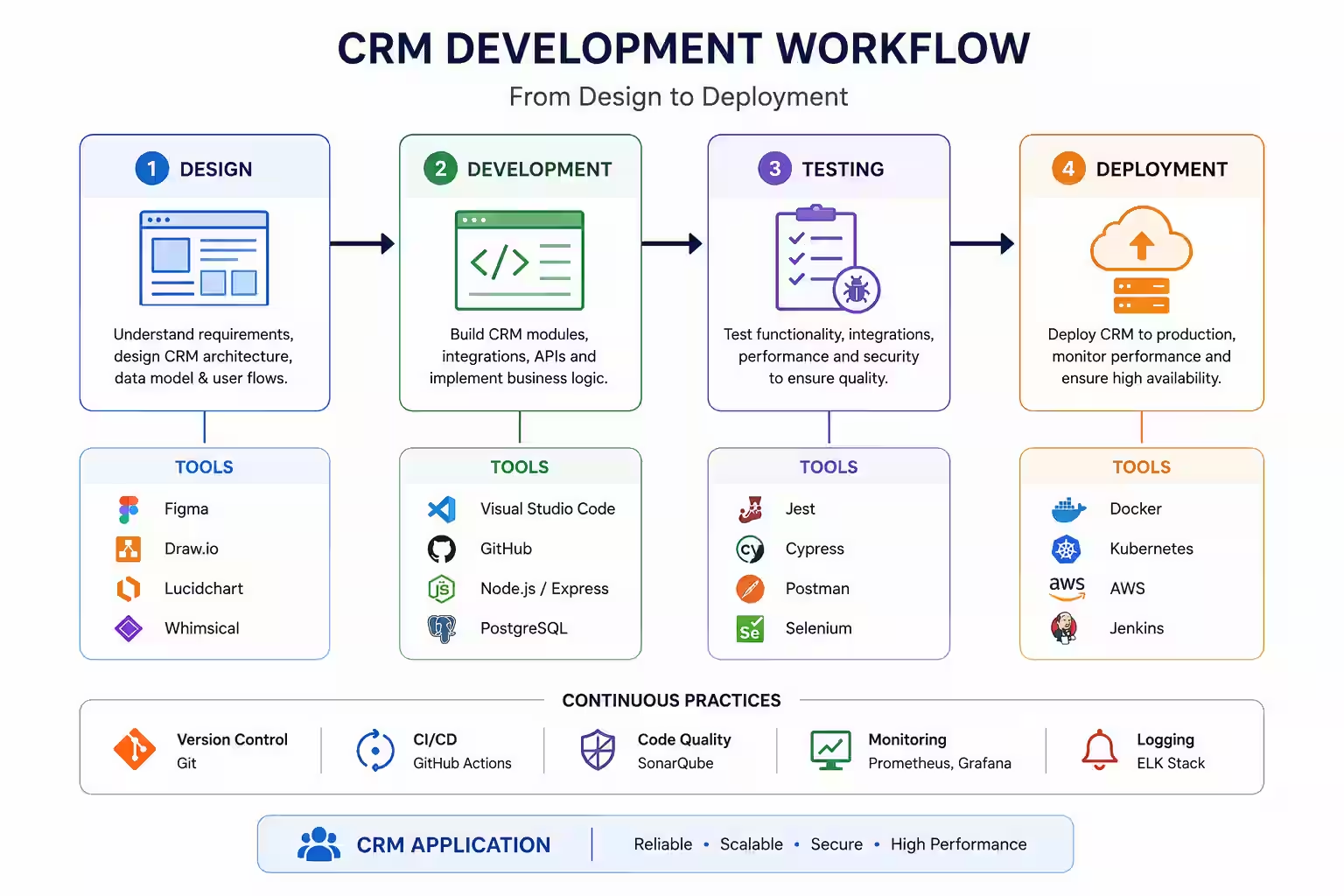
Tools and Practical Applications for CRM Development
CRM development projects rely on collaboration, design, development, and analytics tools throughout implementation.
Popular tools include:
- Jira for project management
- Figma for UI/UX design
- Postman for API testing
- AWS and Azure for cloud hosting
- Power BI and Tableau for reporting
Additionally, businesses can evaluate free alternatives such as Google Looker Studio for reporting and Trello for project management.
What's Next After Hiring a CRM Development Company?
The next step after hiring a CRM development company is creating clear documentation, aligning stakeholders, and defining implementation milestones.
Start by documenting:
- Business goals
- User requirements
- Process workflows
- Integration needs
- Success metrics
Next, establish communication channels and governance processes to keep projects on schedule.
Finally, create a long-term roadmap that includes feature enhancements, automation initiatives, and user adoption programs.
Conclusion
A custom CRM development company helps businesses build CRM systems that align with unique workflows, customer journeys, and operational goals.
As CRM adoption continues to grow across industries, businesses increasingly require solutions that go beyond generic software limitations. Custom CRM development offers greater flexibility, scalability, automation, and integration capabilities that support long-term growth.
By carefully evaluating technical expertise, industry experience, security standards, and support capabilities, you can choose a development partner that delivers lasting business value. More importantly, ongoing optimization and user adoption will determine whether your CRM becomes a competitive advantage or just another software investment.
About Us & Reviews
Whether you're a startup or a growing enterprise, our CRM systems help you streamline client management, automate sales workflows, and boost productivity across departments.